How To Buy Storage For Mac
Part 2: How to cancel iCloud storage plan on Mac Step 1: Click on Apple menu and go to System preferences, then click on iCloud Step 2: Click Manage in the lower right corner. Step 3: Click Change Storage Plan in the upper right corner. Step 4: Click on “Downgrade Options” and enter your apple id password and click manage.
One thing worth mentioning is that when you decrease the plan, the change will come into effect only after the current monthly or annual subscription ends. Another thing you should keep in mind is that if you lowered your storage plan and the size of your data exceeds the need plan, then new data won’t sync with the cloud.
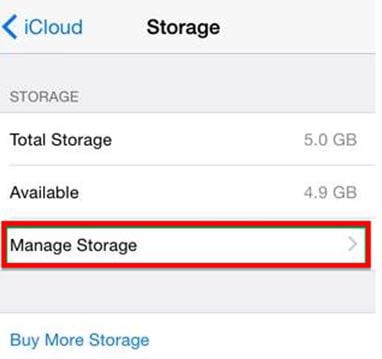
Head to Settings > iCloud > Storage >Skype for business picture mac. Buy More Storage to buy more. You could also. For example, Dropbox, Google+ Photos, Microsoft’s OneDrive, and Yahoo!’s Flickr can all automatically upload photos you take to their servers.
A NAS drive that provides shared storage for everyone on your network is ideal for homes that own multiple Macs and mobile devices. Here are the best NAS drives for Mac owners. By buying your. How can the answer be improved? In my opinion you should go with the 12 inch MacBook, or if you have the extra money, the 13 inch MacBook Pro. If you go with the 12 inch MacBook than you could even get a 2015 model on eBay for much cheaper, just be careful when buying used.
It is a simple way to easily expand as well as pretty cheap. It can be used across any Mac with a USB port. It is also very versatile, since you can pick what drive you want, and where you want to put it.
There, you click the Options button and then untick the Desktop & Documents folders. In the future, these items will not be stored in iCloud – though existing items will remain. To remove those older Desktop and Downloads items from iCloud drive, you must manually save them to your Mac: • In Finder, open iCloud Drive and locate the Documents or Downloads folder. • Open a new Finder window, choose Go>Home • Now drag and drop items from iCloud Drive to your Home directory. The files will be downloaded to and saved on your Mac. The process may take a while, depending on how much bandwidth and how much data you need to shift.
In 3 weeks' time, Mac must cram four years of high school academics, and Devin must cram four years of teenage experience. Now with the help of their shady math teacher (Mike Epps from Next Friday ), a demented classmate (Andy Milonakis), new tattoos, sexy strippers and some trippy animation, can Mac and Devin keep it young, wild and free?  He soon realizes that the only way he'll truly have a chance with her is if he finally graduates high school.
While the MacBook Pro models were refreshed in July of 2014, the laptops were previously refreshed by Apple in February of 2013, and in June and October in 2012. However, you can sometimes get a rough idea of when Apple will refresh its line of laptops by keeping an eye on new processor developments. Apple’s MacBook Pros rely on Broadwell processors made by Intel.
Most external drives come with automatic backup or sync software for Windows. Mac users, on the other hand, can take advantage of 's Time Machine feature. All external drives work with both Windows and Macs, as long as they're formatted in the right file system: NTFS for Windows or HFS+ for Macs. The reformatting takes just a few seconds. If you're on a budget or want to quickly find the best portable storage system,.
It is also very versatile, since you can pick what drive you want, and where you want to put it. You can also leave the drive at home so it can act as a backup drive. There are a couple of methods for external drives. You can either buy a package, or do it yourself. The prices range from the bare bones to quite an expensive RAID setup. It all depends on how much storage you are willing to pay for.
Why do you need to manage iCloud storage? Apple has made a seemingly essential element for all its products, from Macs to iPads, iPhones and even Apple TV. There are four principal elements to the service. These include: • iCloud Backup: It’s used for all the iPad, iPhone and iPod backups you’ve made without using iTunes. • iCloud Drive: This is for all your documents (including Mac Desktop and Downloads data) and data from third-party apps on Macs and iOS devices that store data in the cloud. • iCloud Mail: Naturally, this is storage for all the emails and attachments you’ve ever received through your iCloud account.
For more information check out the. IMac By default there is no way to add internal storage for your iMac.
That may seem counterintuitive, but the reason is that the USB 3.0 connectivity standard, which is the fastest among all non-Thunderbolt standards, is slower than the speed of SATA 3 internal drives. Capacity, however, is a bigger issue. USB external drives are the most affordable external storage devices on the market, and they come with a wide range of capacities to fit your budget. Make sure to get a drive that offers at least the same capacity as your computer. For more information. There's no difference in terms of performance between bus-powered (a data cable is also used to draw power) and non-bus-powered (a separate power adapter is required) external drives.
No matter how many iOS or macOS devices you own, Apple offers just 5GB of free storage to iCloud users – a paltry amount given what rivals offer. But there are ways you can avoid paying for more storage space, or at least limit how much extra you pay.
Source: Apple.com Screen size and quality Of course, one of the primary reasons why the 13-inch MacBook Pro is cheaper is because of its screen quality. The 13-inch MacBook Pro features a 1280-by-800 resolution display for approximately 113 pixels per inch (ppi). The 13-inch MacBook Pro with Retina display offers 2560-by-1600 resolution (227 ppi), while the 15-inch MacBook Pro with Retina display offers 2880-by-1800 resolution (220 ppi). While higher pixel resolution supposedly offers a better quality image, according to a retinal neuroscientist The New York Times, anything over 220 ppi is already beyond what most humans can detect during normal computer usage.
Of course, the newer all include solid-state flash-based storage, but there’s millions of MacBooks and MacBook Pros that still contain powerful processors that are only hampered by slow spinning hard drives. If you use an older MacBook Pro, you can give yourself a nice upgrade with an SSD — plus extend the life of your investment. To start your upgrade process, first you need to determine how much storage you really need right now..
Notes: Your notes from your devices also have to be deleted to make this process a success. Reminder: If you are the type that uses reminders all the time, then I assume you know that the reminders are also uploaded to the iCloud server. Mail: This is also one of the important reasons you got the phone in the first place and clearing the mail in the iCloud is very important since it contains lots of personal information. After erasing everything from your iCloud account, you will no longer be able to access the iCloud backup of your device except if you backed them up using iTunes. This means no back up for your device and when it gets spoiled or goes missing, then all your data also will be gone. Steps to delete iCloud account Deleting iCloud from your devices is the first step to closing your iCloud account. To do so, follow the steps below.
Option at the bottom right of the window. Apple In both cases you’ll see how much storage you’re using, what items are using it (for example, Photos, Docs, Mail or Backup), and where to enable and disable online storage for various applications and Apple services. How to manage iCloud Backup If you back up iOS device(s) to iCloud, you'll soon hit problems if you try to stay under the 5GB storage limit. To reduce the amount of iCloud storage consumed by iCloud backups, and delete existing backups you may have created from iCloud. You don’t actually have to back your devices up to iCloud, though it is convenient; you can use a Mac or PC running iTunes instead. Just connect your device to your computer, launch iTunes (if it doesn’t launch automatically) and click the Device icon that appears to the left of the iTunes window beside the category menu. Apple iCloud storage can easily be managed in iOS.
Once you’ve done that, select Summary and then choose This Computer where you see Automatically Backup. You’ll need to check the Encrypt (device name) backup item in order to keep Health and HomeKit data, and will need to create a password for this. In the future, your iOS device(s) will automatically be backed up to your computer when it is connected, and you won’t need to store those backups on your frugal iCloud account. Once that’s set up, you can remove older device backups from iCloud. On iOS: Tap Settings and navigate to iCloud>Manage Storage and choose Backup. Here you can review your backups and select those you wish to delete. When you tap the red Delete Backupoption, you’ll be asked if you are certain of the decision.
Upgrade Your SSD On all modern MacBooks, Apple includes a solid state drive (SSD) rather than a mechanical hard disk drive (HDD). SSDs have no moving parts, which means they’re much less fragile and considerably faster than older technology.
You won’t have to remove anything to make room. IPhones don’t support for storage expansion. The amount of storage that comes in your iPhone is all you’re going to get. If you find you’re always struggling with not enough free space on your iPhone or iPad, be sure to get a larger one next time.
I highly doubt 1Tb will last long, the way I am going through it. The Macs that I will be focusing on today are the iMac, Mac Pro and MacBook/Pro. The mini is not included but it is very similar to the setup I am going to discuss with the MacBooks. If you have older Macs they will probably still follow these lines. If you want to raise any questions or have a better idea, please leave them in the comments.
The actual speed of a hard drive may be slower because of mechanical limitations and overheads, but that should give you an idea of what's possible. A hard drive's real-world speed tends to be around one-tenth of the SATA 3 standard. SSDs, on the other hand, offer speeds much closer to the SATA 3 ceiling. Most existing internal drives and host devices (such as computers) now support SATA 3, and are backward-compatible with previous revisions of SATA. Since 2015, there's been a new standard called, which is only available for SSDs. M.2 allows the storage device to connect to a computer via PCI express (the type of connection once used only to connect a video card to a motherboard) and is therefore much faster than SATA.
The is a tiny drive that you can combine with your built-in drive to create a single “fused” storage system on your MacBook Air or Pro. For all intents and purposes, the acts like a little USB thumb drive — but it fits flush into the SDXC card slot instead and appears on your Mac like an external drive that is always on, always available. It appears as a separate storage option to your Mac’s operating system. The, on the other hand, also uses the SDXC card slot but it combines with your built-in storage to form a single “fused” drive. If you want a near-permanent — but easy storage solution for your MacBook Air or Pro — the TarDisk Pear system might be your best bet. Of course, if you use your SDXC card slot for loading photos, you can pick up a small USB-based card reader like the to easily load photos and video off of your SD camera cards through a USB port.